Hybrid & Livestream · 8 min read · August 18, 2026
Hybrid Event Production Checklist: On-site Energy, Online Reliability
A production checklist for conferences, launches and internal broadcasts serving both venue audiences and remote viewers.
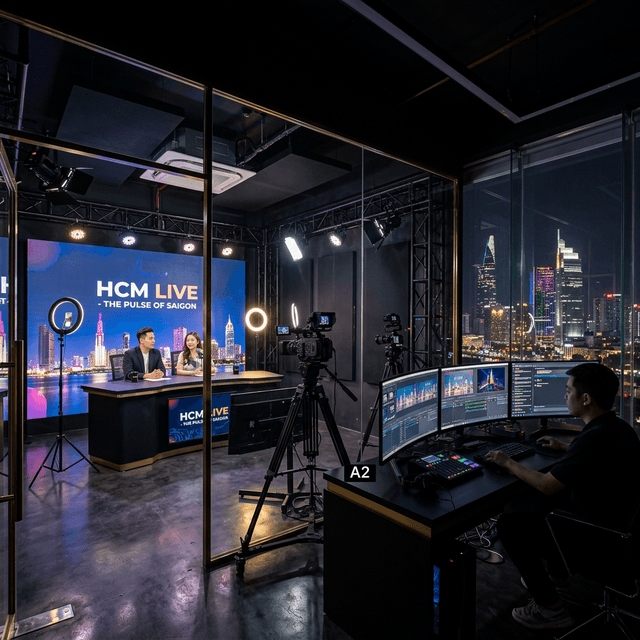
A hybrid event is one programme with two audience experiences. Remote viewers should not feel like they are watching a security camera pointed at a stage. The broadcast needs its own visual language, host moments, graphics, interaction and contingency plan.
Design two connected audience journeys
List what venue guests and remote viewers can see, hear and do at every stage. Decide which moments are shared and which need a separate online treatment. A networking break in the room may require an interview, recap or moderated discussion online.
Technical checks before show day
Complete a rehearsal using the actual venue infrastructure and platform accounts.
- ✓Primary and backup internet routes
- ✓Dedicated bandwidth separated from guest Wi-Fi
- ✓Power protection and backup recording
- ✓Camera positions and unobstructed sightlines
- ✓Direct audio feeds and independent monitoring
- ✓Graphics, captions, playback and presentation formats
- ✓Platform permissions, stream keys and moderation
- ✓Remote speaker connection and fallback communication
Protect the content workflow
Establish one approved folder and a firm deadline for presentations, videos, lower-thirds and music. Check aspect ratio, fonts, audio levels and usage rights before the rehearsal. Late media changes are a common source of preventable broadcast errors.
Prepare incident responses
Document what the director should do if a speaker disconnects, playback fails, the venue loses power or the primary stream drops. Assign decision authority so the team acts immediately instead of debating during the live show.
Measure content quality
Peak viewers alone does not reveal whether the programme worked. Review average watch time, audience drop-off by segment, interactions, CTA clicks, registrations and replay viewing. Use those signals to improve the next production.